
This post may contain affiliate links. See our disclosure policy.

Have you ventured into the land of Fresh-Milled Baking but become frustrated with how hard it is to properly knead whole grain breads? Do you dream of a fancy stand mixer, but your budget just doesn’t allow it?
Then, friend, do I have the recipe for you!
I have come to truly love this 100% Spelt Overnight Bread. Not only is it incredibly simple and frugal, it is so delicious.
If a nourishing, easy bread sounds wonderful to you, then please keep reading!
Why Bake with Fresh-Milled Spelt Flour?
What Makes Spelt Different from Modern Wheat
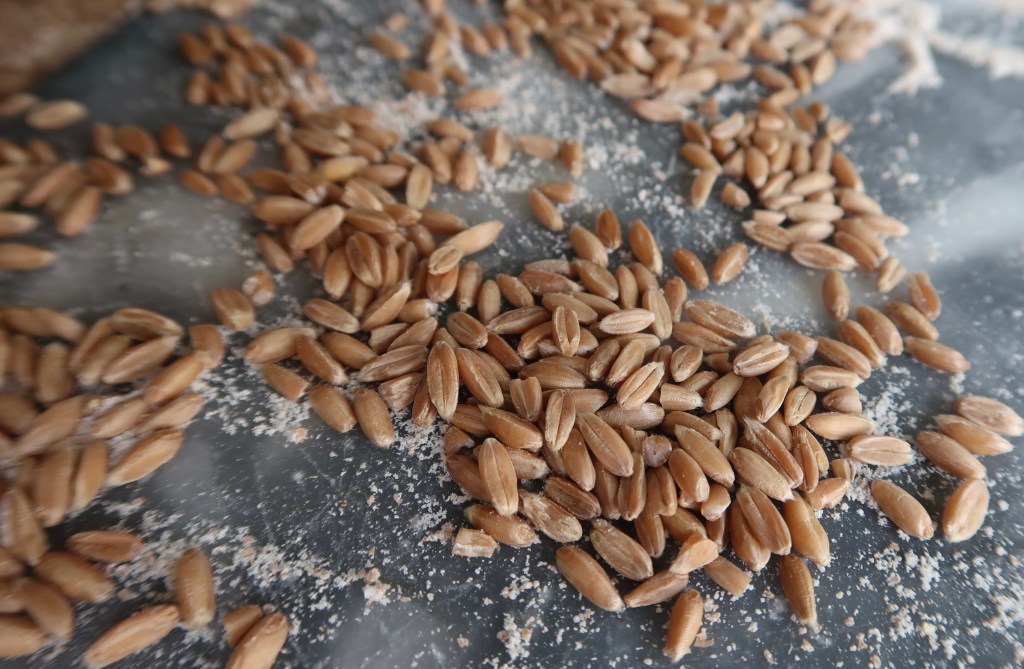
Spelt, unlike modern wheat, has not undergone extensive hybridization (i.e., modification to improve yield and disease resistance). Spelt was modified with a domesticated wheat and a wild goat grass more than 4,000 years ago, but has been essentially unchanged since then.
This lack of tampering has kept its natural nutritional content and baking qualities.
Spelt vs Hard Red/White Whole Wheat for Sandwich Bread
Spelt has a delicate but present gluten structure. Spelt wheat berries contain higher amounts of gliadins (stretch) but lower amounts of glutenins (strength) than modern wheat. This means that with a 100% spelt bread, you can get considerable stretch, but moderate to minimal strength—essentially, your spelt dough must be handled differently. Whereas hard wheats can handle significant stress and rebound well, spelt needs a gentler touch and plenty of time to rest (refrigerated).
Why Spelt Works Well Without a Stand Mixer
Seeing that spelt needs slight handling makes it a perfect wheat to work with when you do not have access to an expensive stand mixer.
Spelt, on its own, naturally wants to develop its gluten by simple stretch and folds—followed by a long rise in a refrigerated place. The stretch and folds, then cold rise, give its gluten the time it needs to develop and then organize for a lovely crumb. Spelt, being as nutritionally abundant as it is, goes truly wild with fermentation at room temperature. That is why the fridge is your best friend when it comes to spelt baking.
This is every busy gal’s dream—a healthy bread that truly wants little work from you!
Health Benefits of Spelt Flour
What Is an Ancient Grain?
Spelt is considered an ancient grain. What exactly is that, you ask? Ancient grains are particular varieties of grains that can be dated back to the beginning of wheat cultivation. These grains include einkorn, spelt, emmer, and khorasan.
If you’re new to fresh-milled baking, my Wheat Berry 101 post walks through what wheat berries are and what type of wheat is best for various baking applications.
Nutritional Advantages of Spelt
So, you may ask—what’s so special about a really old wheat grain? Well, friend, because spelt has been unchanged, it contains nutrition in volumes that modern wheat can’t quite compete with.
Spelt flour is naturally rich in fiber—much higher than modern wheat—and also provides notable amounts of protein, B-vitamins, and manganese. Because of its protective hull and high water solubility, spelt’s nutrients are easier for the body to access and stay stable for longer periods. Its vitamins and minerals are also more evenly distributed throughout the entire grain.
Check out my post on whole wheat nutrition to learn more about how whole grains support digestion, blood sugar balance, and overall nourishment.
Glycemic Index & Digestibility
The glycemic index (GI) is the way in which we measure how fast carbohydrates break down within the body and how quickly a person’s blood sugar rises. Consuming foods that are lower on the GI is generally considered a healthier option, as they do not spike insulin levels as dramatically.
Spelt has a lower GI than most whole-wheat grains because it contains a high percentage of both simple and complex carbohydrates. The makeup of these carbohydrates is particularly conducive to digestibility because of the length of their carbohydrate chains. Spelt also contains carbohydrates called mucopolysaccharides, which work to assist in blood clotting and stimulate the body’s immune system.
Nutrition and grain background adapted and summarized from King Arthur Flour: Whole Grain Baking, First Edition (2006).
Why This 100% Spelt Bread Recipe Works
Gentle Gluten Structure and Mixing
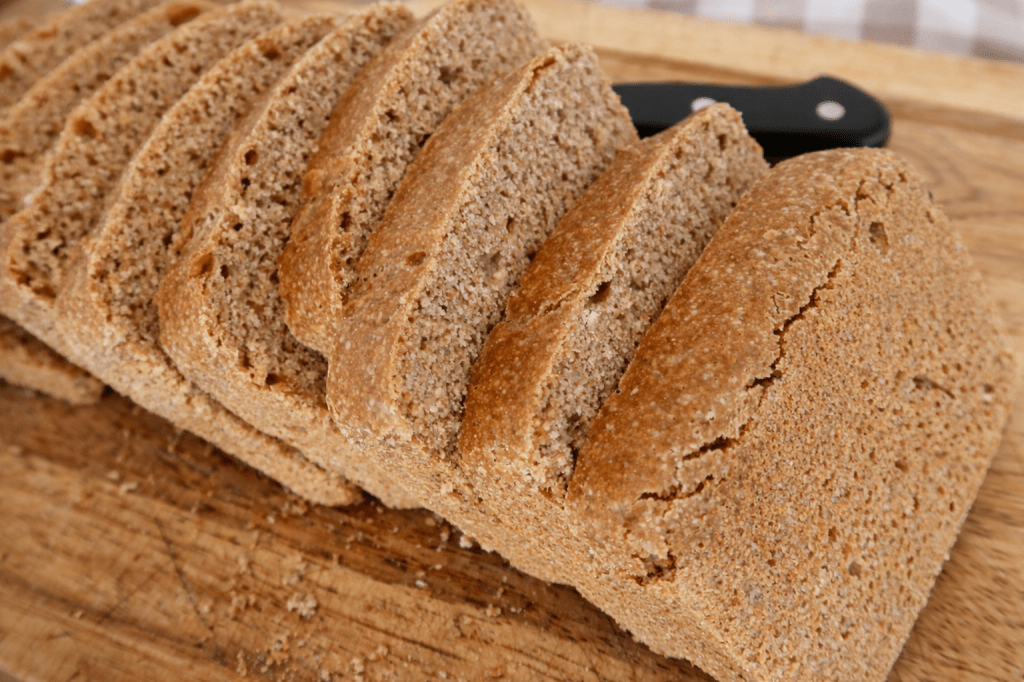
Spelt benefits greatly from gentle handling. Though the gluten network is prevalent in spelt—it does not like a strong arm. That is why gentle stretch and folds are the best way to get a lovely texture with spelt.
Hydration and Dough Handling for Spelt
Spelt is an interesting grain in that it absorbs liquids realitively quickly, unlike many modern wheats, but will lose the liquid it retains just as quickly. Which can lead to a lot of frustration when trying to have a consistent interior texture to any baked good made exclusively with spelt.
This is why I recommend very particular handling for this sandwich bread recipe.
Short Mixing + Proper Fermentation
I recommend a short autolyse, combining just the flour and water with a rest of about 20 minutes. After this autolyse, perform 2 stretch and folds and one final coil fold, with about 20 minutes in between each. In the first stretch and fold, you will add all the ingredients left in the recipe except oil. Then add the oil in the second stretch and fold. Lastly, in the final coil fold, gently form the dough. I don’t love to seem fussy in my recipes, but every trick I give you here is to give you the best, most consistent results. This gives you time to create a lovely gluten network without overworking the spelt.
And here is the trick—an overnight bulk rise. Spelt, in most cases, shines with a cold bulk rise. This gives the bran and germ plenty of time to properly absorb liquids and organize its gluten network to create a lovely texture. Without this refrigerated rise, spelt simply goes wild at room temperature and ferments before its gluten network has time to properly organize itself.
Achieving a Soft, Sliceable Crumb
Knowing these simple tricks of gentle stretch and folds, a final coil fold, and a cold bulk, overnight rise will give you the best chances of a lovely spelt sandwich bread.
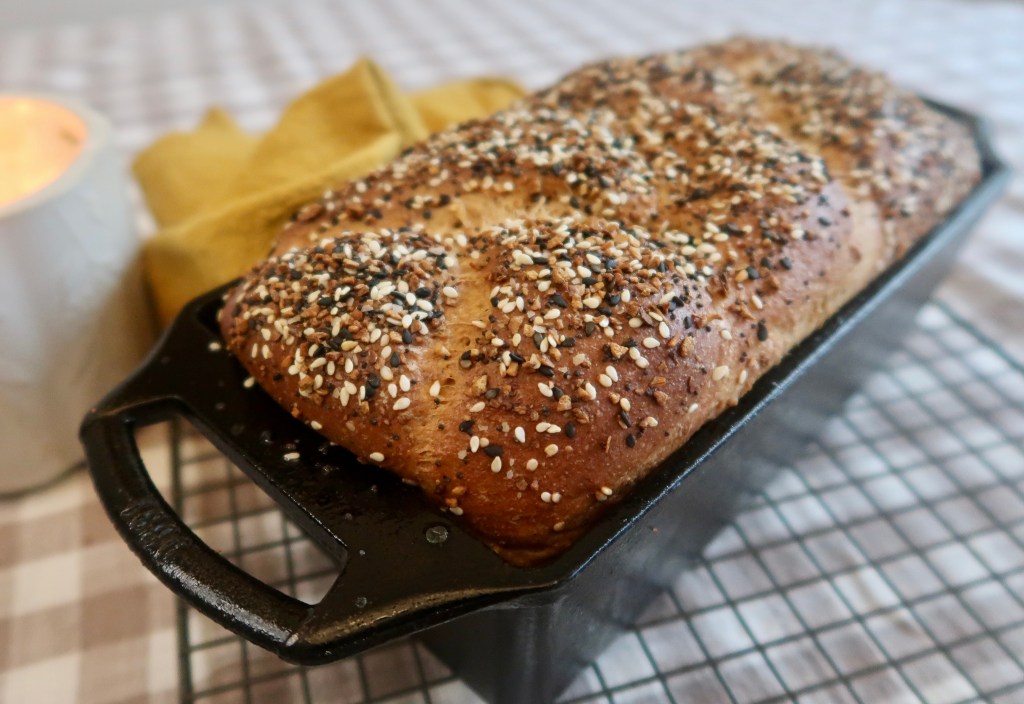
As with most—if not all—ancient grains, you do not want your shaped loaf to rise high over your bread pan, as you would with a modern wheat bread. About to the rim of the pan is the max height you’d want to achieve. I think a much better indicator of “readiness” is the feel of your dough. If the dough reaches the top of your pan, has expanded to the corners and slowly springs back when poked with a wet finger, then you are ready!
A Note on Spelt’s Texture
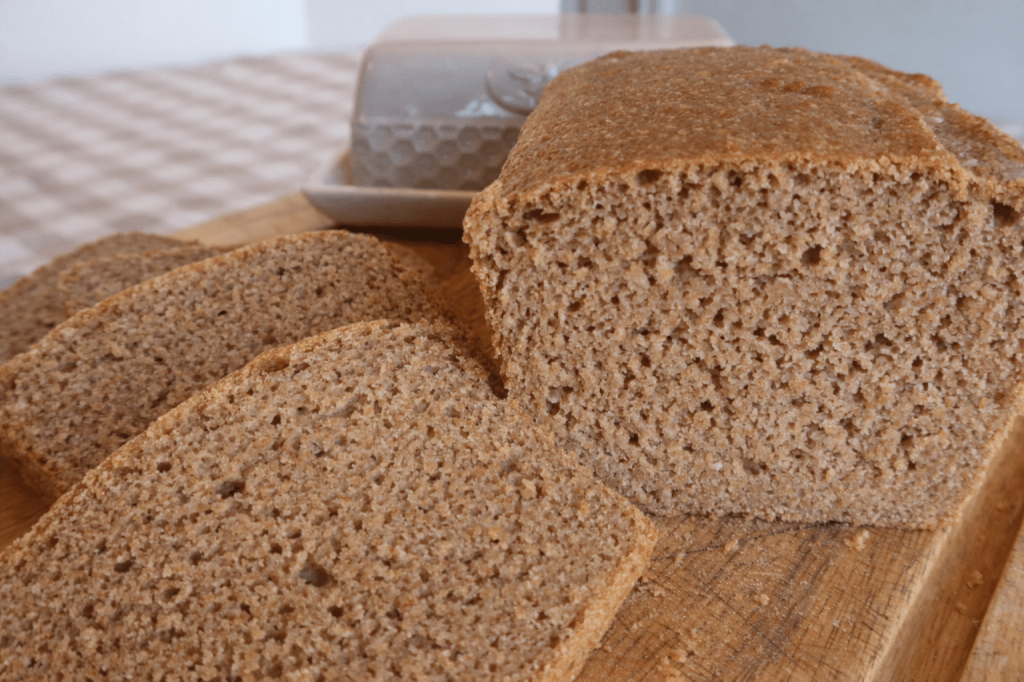
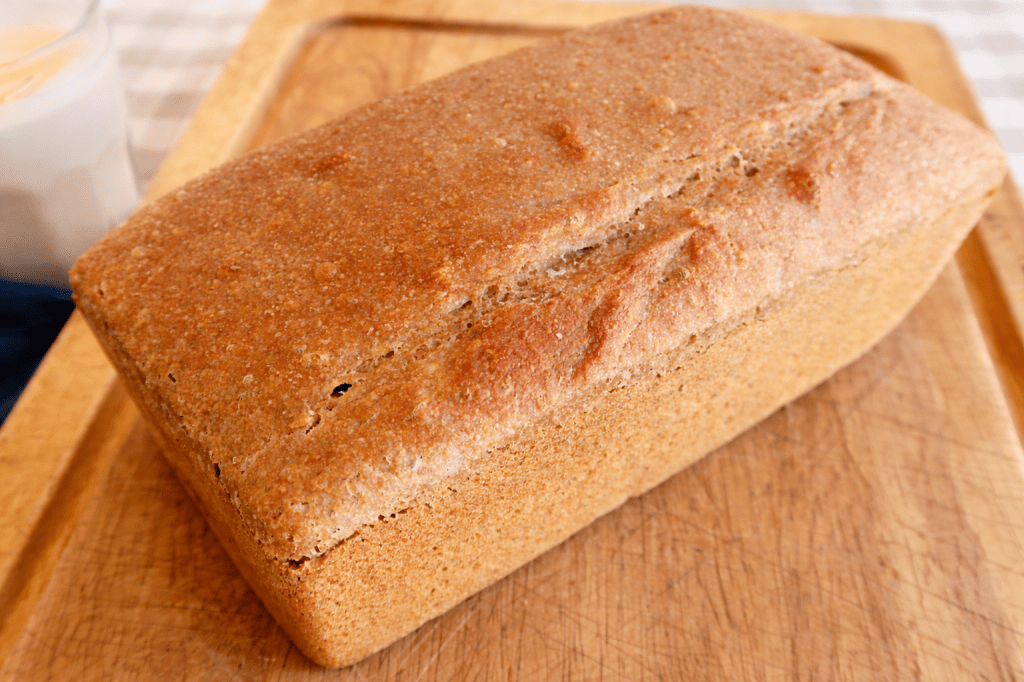
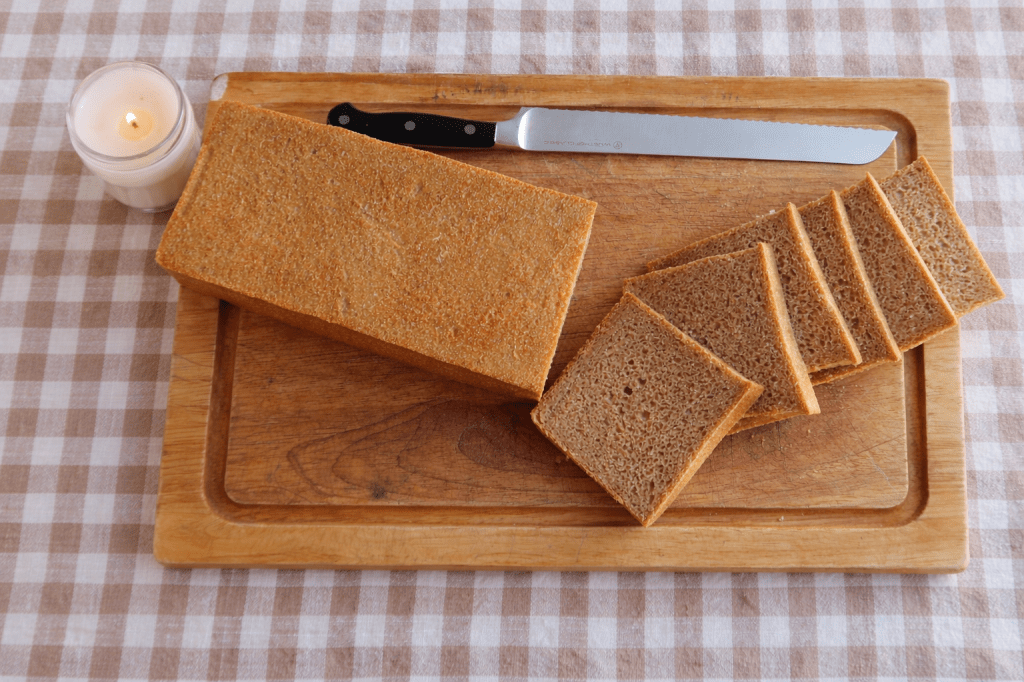
100% spelt bread will not have the cottony, elastic interior typical of breads made with modern hard wheats. Try as you may, spelt often tears along the upper portion of the loaf where the dough meets the rim of the pan. This is not a failure.
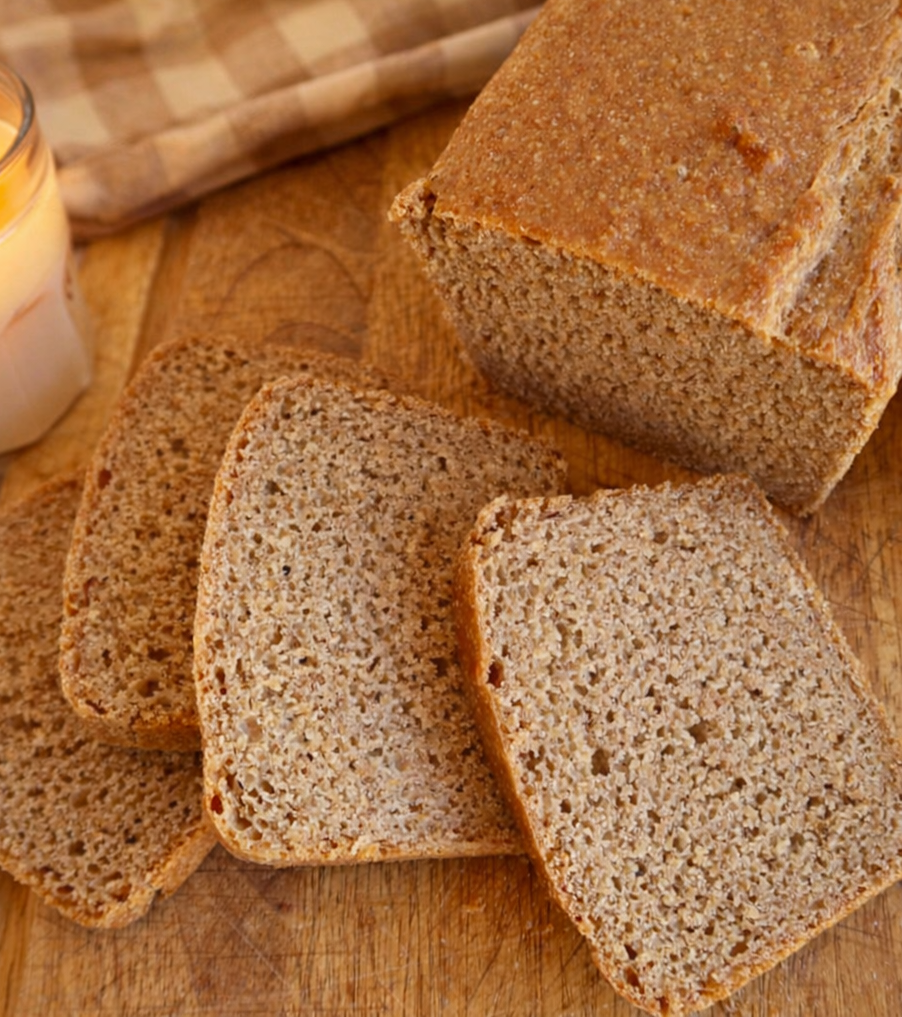
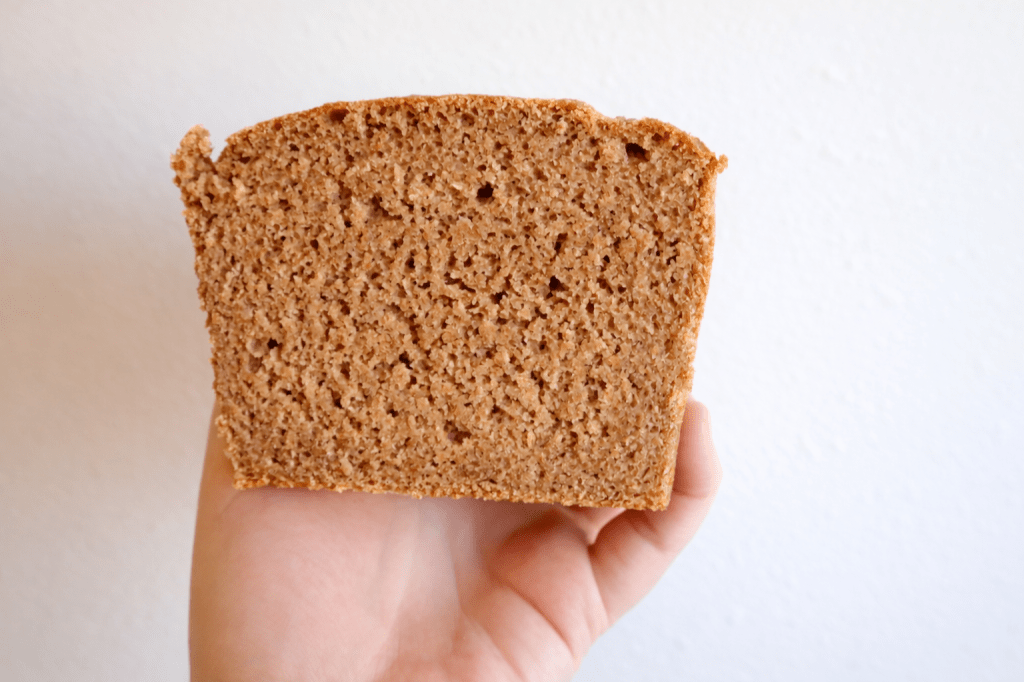
This loaf is made with spelt in its natural state, without additives or dough conditioners. The most reliable indicator of success is stability when slicing. Some crumbling is normal, but the loaf should hold together well and slice cleanly with a sharp knife.
Tools You’ll Need (No Stand Mixer Required)
- Large mixing bowl
- Dough whisk or wooden spoon
- Bench scraper (optional but helpful)
- Loaf pan (8.5″x4.5″ recommended)
- Kitchen scale (highly recommended)
- Clean kitchen towel or bowl cover
Are you interested in more fresh-milled baking tools that I find helpful? Then check out this post!
Ingredients for 100% Spelt Overnight Bread
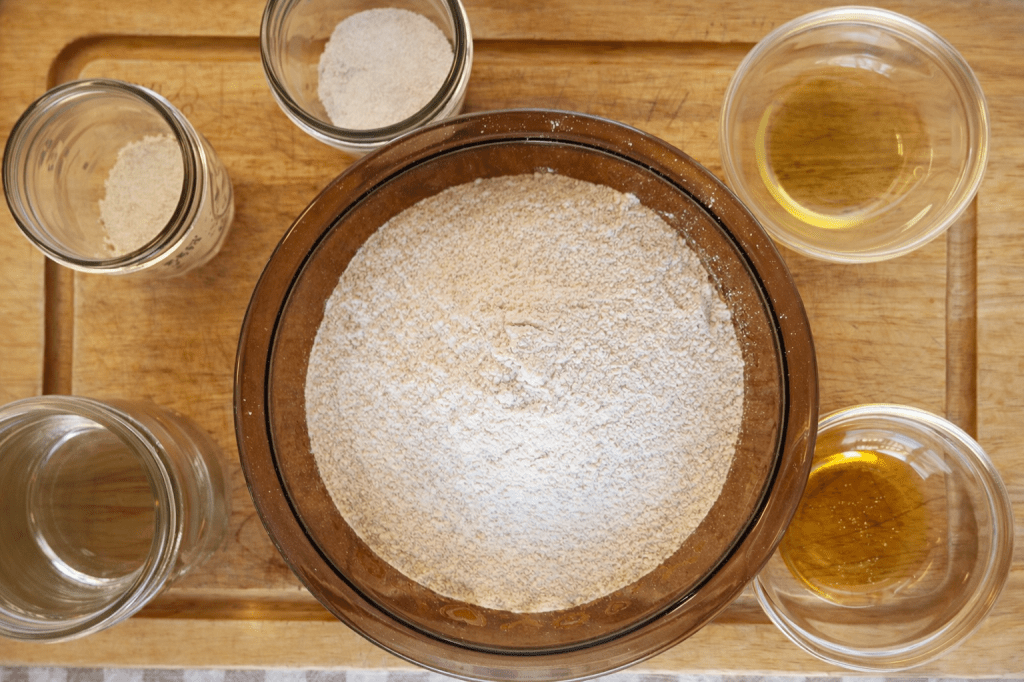
- Fresh-milled spelt flour
- Water
- Salt
- Instant Yeast
- Honey (do not use raw, standard grocery store is preferred)
- Fat (butter or oil)
Step-by-Step: How to Make 100% Spelt Sandwich Bread by Hand
Step 1: Mixing the Dough (No Kneading Required)
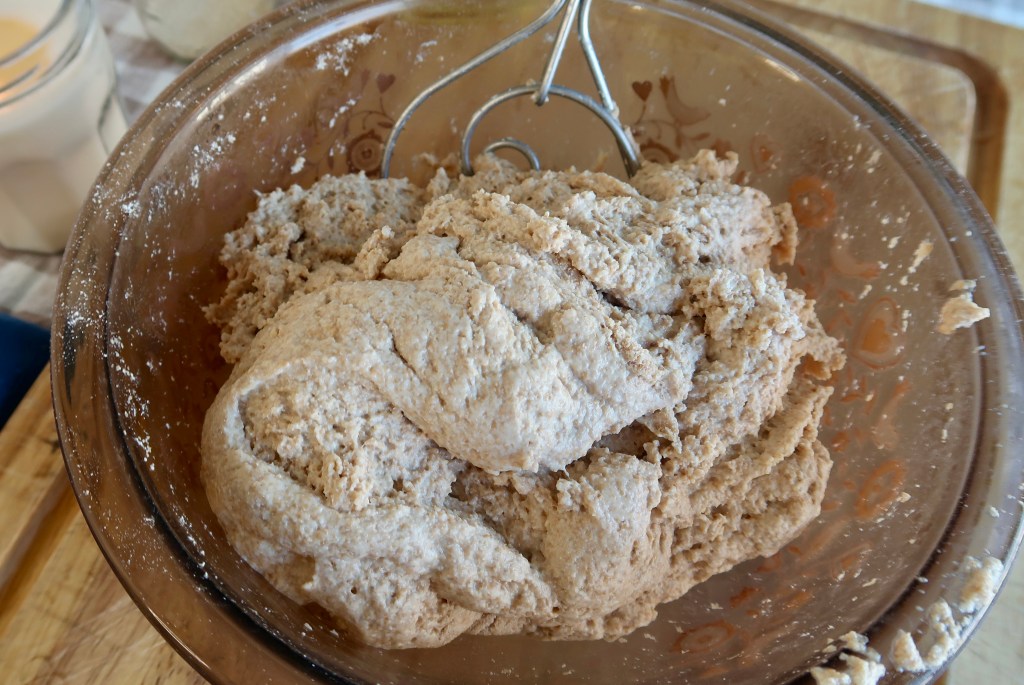
Mill your spelt berries.
Autolyse the dough by combining the flour and water until no dry flour remains. Cover and rest for 20 minutes.
Step 2: First Rest & Gentle Strength Building
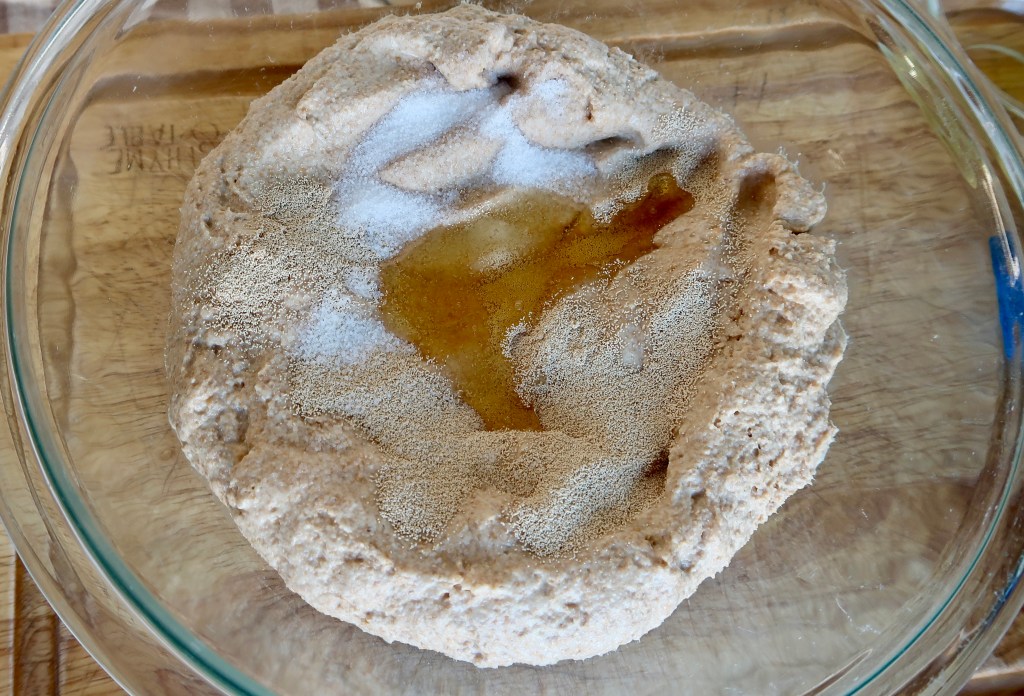
Using wet fingers, slightly flatten the dough. Add the salt, yeast, and honey. Perform gentle stretch-and-folds until all ingredients are fully incorporated. Cover and rest for 20 minutes.
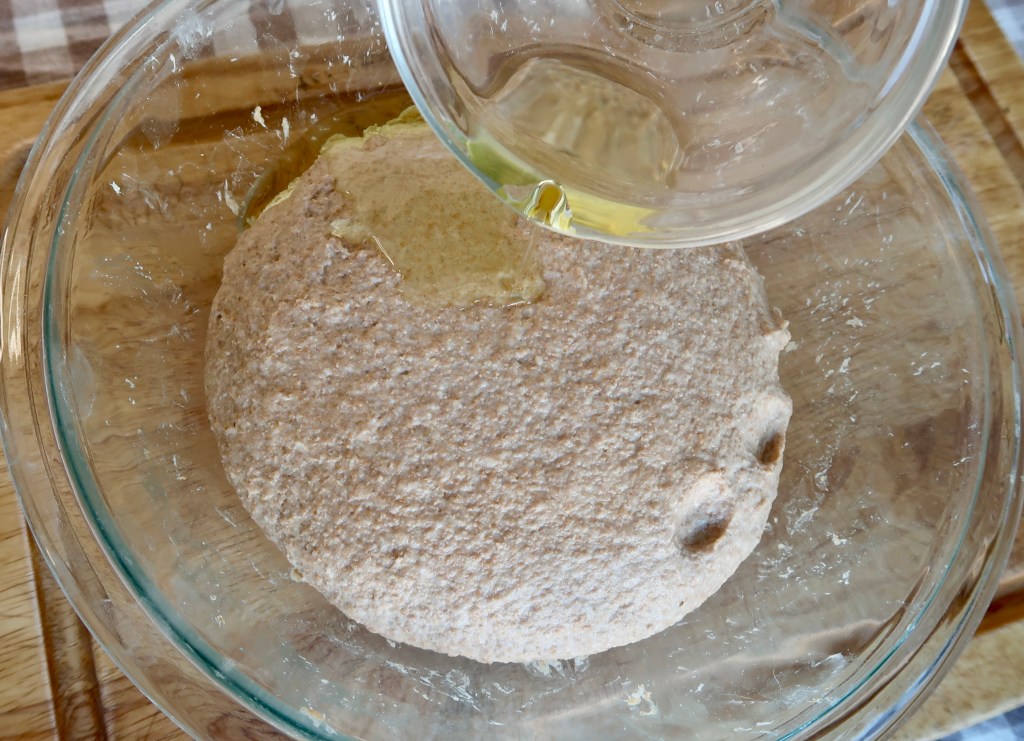
After the rest, add the oil and perform additional stretch-and-folds until the oil is absorbed. Cover and rest another 20 minutes.
Finally, perform one very gentle stretch-and-fold, or an optional (but highly recommended) coil fold, to finish building structure.
✨Check out my videos below for an example of a stretch and fold and a coil fold
Step 3: Bulk Fermentation—What to Look For
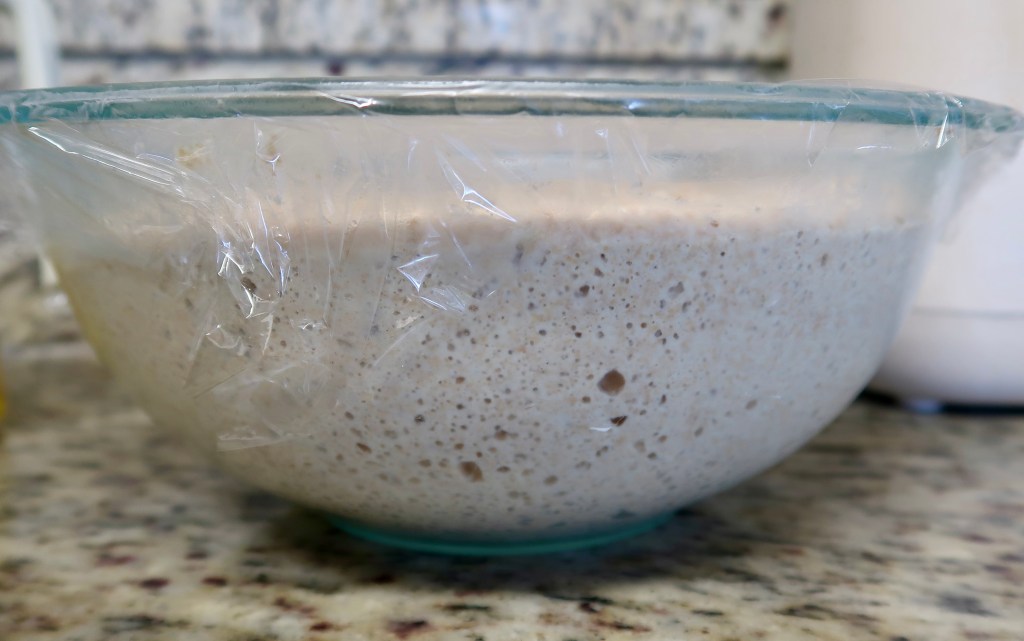
Cover the dough and allow it to bulk ferment overnight for 10–14 hours in the fridge.
Step 4: Shaping Spelt Dough for a Sandwich Loaf
Grease your loaf pan and lightly grease your counter where you will shape the dough.
Preshape
Gently fold the left third of the dough toward the center, then fold the right third over the center. Cover and rest for 5 minutes.
Final Shape
Using lightly greased fingers, gently press the dough into an even rectangle.
- Fold the top third down to the center
- Fold the bottom third up to the center
- Fold the left side toward the center
- Fold the right side over the center, forming a log
Lightly pinch the seam closed. Gently drag the dough toward yourself to create slight surface tension. Use a bench scraper to flip the dough seam-side down into the loaf pan. Cover with greased plastic wrap.
Step 5: Final Rise & Baking
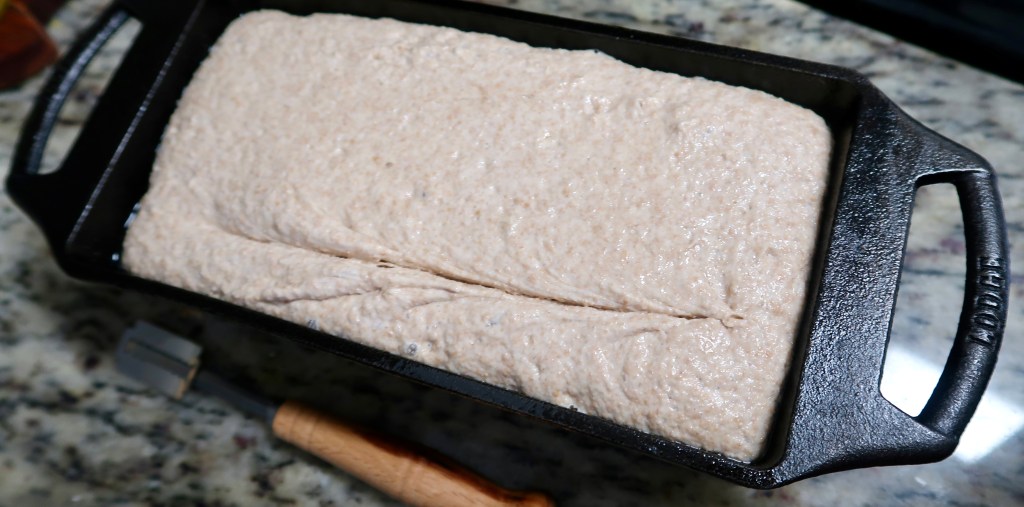
Preheat the oven to 425°F.
Once the dough has risen to the top of the pan, gently slash one side of the loaf about ¼ inch deep. This step is optional but highly recommended.
Bake for 10 minutes, then reduce the oven temperature to 375°F. Continue baking for 25–30 minutes, or until the loaf is golden brown and the internal temperature reaches 190°F.
Let cool completely before slicing. Enjoy!
Optional Same-Day Bake
For a same-day bake, increase the instant yeast to 2 grams and skip the overnight bulk fermentation. Be aware that this dough ferments quickly—watch the dough closely and rely on visual and tactile cues rather than time alone.
100% Spelt Easy, Overnight Bread
A simple, no-knead loaf made with freshly-milled spelt flour. This gentle, overnight method respects spelt’s delicate gluten structure while producing a soft, sliceable loaf perfect for everyday use.
Timing note: This dough is well-suited to being mixed in the evening. I find starting it during after-dinner cleanup allows for an easy overnight fermentation and a relaxed bake the next day.
Gram measurements are strongly encouraged. Freshly-milled spelt flour varies significantly depending on grain, mill, and humidity. Weighing ingredients ensures proper hydration, structure, and consistent results. Volume measurements are provided only as a convenience.
Ingredients
- 560 g (4 ½ cups) freshly-milled spelt flour
- 425 g (1 ¾ cups + 2 tablespoons) water
- 21 g (1 tablespoon) honey (avoid raw for consistent results)
- 1 g (¼ teaspoon) instant yeast
- 11 g (1 ¾ teaspoons) fine salt
- 17 g (1 tablespoon + ½ teaspoon) neutral oil
Instructions
Step 1: Mixing the Dough (No Kneading Required)
- Mill your spelt berries.
- Combine the flour and water until no dry flour remains.
- Cover and rest for 20 minutes (autolyse).
Step 2: First Rest & Gentle Strength Building
- Using wet fingers, gently flatten the dough.
- Add the salt, yeast, and honey.
- Perform gentle stretch-and-folds until fully incorporated.
- Cover and rest for 20 minutes.
- Add the oil and perform additional stretch-and-folds until absorbed.
- Cover and rest another 20 minutes.
- Finish with one very gentle stretch-and-fold or an optional (but recommended) coil fold.
Step 3: Bulk Fermentation — What to Look For
Cover the dough and allow it to bulk ferment overnight in the fridge for 10–14 hours. The dough should appear slightly domed, relaxed, and airy, but not fragile or over-expanded.
Step 4: Shaping Spelt Dough for a Sandwich Loaf
- Grease a loaf pan and lightly grease your counter.
-
Preshape:
Fold the left third of the dough toward the center, then fold the right third over the center. Cover and rest for 5 minutes. -
Final Shape:
Gently press the dough into an even rectangle.- Fold the top third down to the center
- Fold the bottom third up to the center
- Fold the left side toward the center
- Fold the right side over the center, forming a log
- Lightly pinch the seam closed.
- Gently drag the dough toward yourself to create slight surface tension.
- Flip seam-side down into the loaf pan.
- Cover with greased plastic wrap.
Step 5: Final Rise & Baking
- Preheat the oven to 425°F (220°C).
- Allow the dough to rise until it reaches the top of the pan.
- Optionally slash one side of the loaf about ¼ inch deep.
- Bake for 10 minutes, then reduce the oven temperature to 375°F (190°C).
- Bake an additional 25–30 minutes, until golden brown and the internal temperature reaches 190°F.
- Cool completely before slicing.
Optional Same-Day Bake
For a same-day bake, increase the instant yeast to 2 grams and skip the overnight bulk fermentation. This dough ferments quickly—watch the dough closely and rely on visual and tactile cues rather than time.
Storage and Freezing Instructions
Bread stores well at room temperature for up to 3 days. Be sure to either place it in a bread box or bag—alternatively, you can wrap it with plastic wrap.
I do not recommend refrigerating baked bread, as the cold dries bread considerably.
To freeze your bread:
- Let cool completely
- Slice the bread
- Wrap with wax paper and plastic wrap, and label
FAQ
Why didn’t my spelt bread rise well?
Chances are either your yeast is dead or you did not develop your gluten network enough. First, be sure that your yeast is alive by dissolving it in some water and honey. If it does not bubble up after 5 minutes, throw it out and purchase more. Be sure to store yeast in the freezer.
If your yeast is alive, then focus on your stretch and folds. Each stretch and fold should produce less tearing and create a more extensible dough.
Can I use store-bought spelt flour?
Unless you are able to buy store-bought spelt that has its bran and germ present (which must be either refrigerated or frozen), you will not be buying a whole grain product. But do not be discouraged! Though its health qualities will not be as plentiful—it will still be delicious. I have not tested this recipe with this sort of flour, but I would love to hear how it works for you.
Can I make this dairy-free?
Absolutely! You can simply use any oil you like rather than butter. I commonly choose oil over butter with this bread.

I hope that this recipe has given you the confidence to begin baking with ancient grains. Not only is spelt deeply nutritious, but it is one of the easiest ways to bake fresh-milled bread at home.
Not everything in baking requires a fancy mixer—or a very strong arm—and my sincere hope is that your family comes to enjoy this 100% Spelt Overnight Bread as much as mine!
What’s your favorite way to enjoy spelt bread?
Blessings,
Payton



 thecontentedhearth.com
Leave a comment