

This post may contain affiliate links. See our disclosure policy.
Years ago, I was introduced to Weston A. Price and a lovely cookbook called Nourishing Traditions. I’m not unique in saying that it was the catalyst for taking a comprehensive look at the food I was feeding myself and my family.
Sally Fallon Morell, the author of Nourishing Traditions, was the first person I heard talk about milling grains for bread. Later, my oldest sister introduced me to Sue Becker and her incredible YouTube videos on the benefits of truly whole-grain baked goods.
I was convinced.
If you’ve recently come across the concept of milling grains for baking and have no idea what people are talking about—then this post is for you!
What is Fresh-Milled Flour?
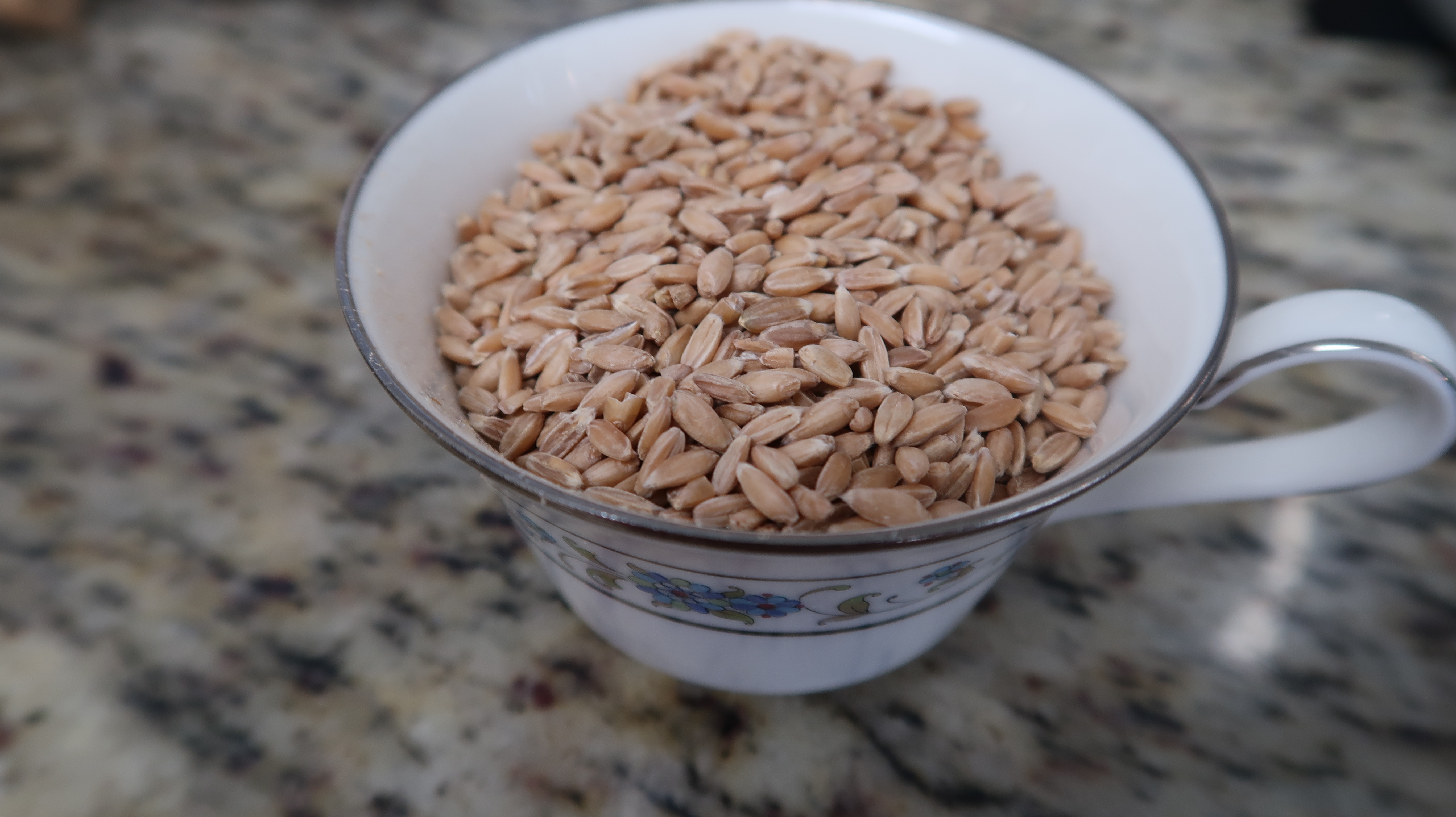
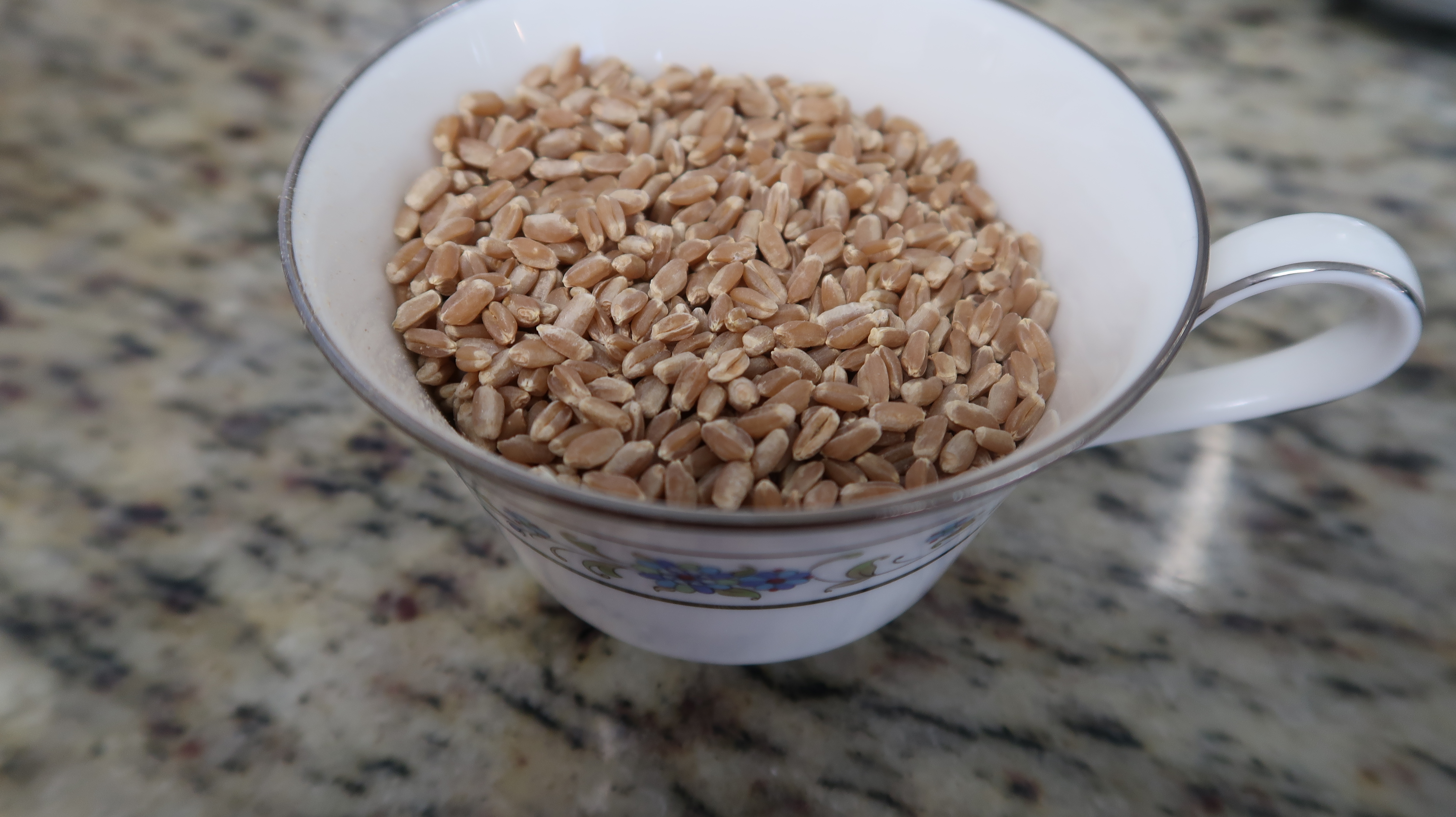
Fresh-milled flour is a simple, yet largely forgotten concept.
I know I’m not the only one who never gave white flour from the grocery store a second thought. That’s just what people bake with… right?
Not exactly.
In reality, the process is pretty straightforward: the farmer grows the wheat, and the miller grinds it into flour. But when you mill grain at home, the entire wheat berry—including the bran, germ, and endosperm—is used. This makes for a highly nutritious flour, unlike the white, shelf-stable version we find in stores.
A Short History Lesson
Wheat was first domesticated in Mesopotamia around 10,000 B.C. Over time, it was cultivated for better harvest yields, improved storage, and enhanced flavor and rise in baked goods.
Before the 19th century, sifting flour—removing the bran and germ—was a luxury only the elite could afford. But by the late 1800s, the invention of roller mills changed everything. These large mills made it easy to strip away the bran and germ, leaving only the soft, white endosperm behind.
It was profitable too. The bran and germ, rich in nutrients, were sold off as livestock feed, while the now-depleted white flour became the standard on grocery shelves.
Unfortunately, this came at a cost. Over time, the widespread use of white flour led to serious nutritional deficiencies like:
- Pellagra
- Beriberi
- Anemia
- Neural tube defects
This prompted the U.S. government to mandate the enrichment of white flour—adding back iron, thiamine, riboflavin, niacin, and folic acid.
The Nutritional Powerhouse Inside Fresh-Milled Flour
The wheat berry is composed of:
- Bran – the fiber-rich seed coat
- Germ – the nutrient-dense embryo
- Endosperm – the starchy portion, rich in protein
Most of the vitamins, minerals, and fiber are found in the bran and germ—exactly the parts removed from white flour.
🥣 Did You Know? One cup of fresh-milled whole wheat flour contains around 43% of your daily magnesium needs!
✨ Nutrients in Fresh-Milled Whole Wheat Flour
Fresh-milled flour is rich in naturally occurring nutrients that are often lost in store-bought white flour. By milling your own grains at home, you retain the full spectrum of vitamins, minerals, and fiber—exactly as God designed it.
🌾 Macronutrients
- Protein
- Healthy Carbohydrates
- Dietary Fiber
- Natural Fats (small amounts)
💪 Key Vitamins
- Thiamine (B1)
- Riboflavin (B2)
- Niacin (B3)
- Pantothenic Acid (B5)
- Pyridoxine (B6)
- Folate (B9)
- Vitamin E
🧂 Essential Minerals
- Iron
- Magnesium
- Phosphorus
- Potassium
- Calcium
- Zinc
- Selenium
- Copper
- Manganese
- Natural Sodium (very low)
Note: Nutrient content can vary depending on the wheat variety and freshness, but fresh-milled flour is always more nourishing than refined alternatives.
How Much Nutrition Does It Actually Give You?
I was amazed when I learned just how much nutrition is in fresh-milled flour. The comparison to store-bought flour is almost laughable.
Whole-grain flour is:
Loaded with essential nutrients – like magnesium, iron, and B vitamins
High in dietary fiber – promoting better digestion and blood sugar regulation
Rich in protein – making meals more satisfying and filling
🌾 Daily Nutrients from 1 Cup of Fresh-Milled Whole Wheat Flour
Here’s how one cup of home-milled wheat flour contributes to your daily nutrient needs. These values are based on the average nutritional content of hard red or hard white wheat.
| Nutrient | Amount in 1 Cup | % of Daily Need | Notes |
|---|---|---|---|
| Fiber | 12–15 g | 48–60% | Supports digestion, keeps you full |
| Protein | 13–16 g | 28–35% | Builds and repairs tissues; essential for muscles |
| Iron | 3.6 mg | 20% | Helps carry oxygen in the blood |
| Magnesium | 137 mg | 43% | Supports muscle and nerve function |
| Phosphorus | 346 mg | 49% | Essential for bones and cells |
| Potassium | 405 mg | 16% | Helps regulate fluid and muscles |
| Calcium | 34 mg | 3% | Builds strong bones and teeth |
| Zinc | 2.7 mg | 34% | Strengthens immunity |
| Selenium | 42 mcg | 76% | Powerful antioxidant |
| Copper | 0.4 mg | 44% | Supports iron absorption |
| Manganese | 3.7 mg | 205% | Vital for metabolism and bones |
| Sodium | <5 mg | <1% | Naturally low—great for heart health |
| Thiamine (B1) | 0.5 mg | 45% | Energy and nervous system support |
| Riboflavin (B2) | 0.1 mg | 9% | Helps body use energy |
| Niacin (B3) | 5.4 mg | 39% | Supports digestion and skin |
| Pantothenic Acid (B5) | 1 mg | 20% | Helps metabolize fats |
| Pyridoxine (B6) | 0.3 mg | 20% | Brain health and energy production |
| Folate (B9) | 38 mcg | 10% | Important for cell growth |
| Vitamin E | 0.5 mg | 3% | Antioxidant protection |
Note: Percentages based on general recommended daily values for adult women (19–50). Actual needs may vary based on age, pregnancy, and activity level.
Health Benefits You Can Feel
The most noticeable change after switching to fresh-milled flour was improved digestion. It’s no surprise—white flour contains almost no fiber, while fresh-milled flour is packed with it.
The high protein content also makes a difference. My children used to eat 3–4 pancakes made with white flour. Now? They’re full after 1–2 fresh-milled pancakes.
And don’t underestimate magnesium! It’s increasingly hard to get enough in our modern diets. One cup of fresh-milled whole wheat flour provides nearly half your daily requirement.
Kitchen Benefits Beyond Nutrition
We almost never buy flour from the grocery store. Instead, we order our grains in bulk from Azure Standard every six months.
Here’s what we buy:
- 50 lbs Spelt
- 50 lbs Hard White Wheat
- 50 lbs Soft White Wheat
All for around $175.
For comparison, 150 lbs of store-bought whole wheat flour costs about $135—but it’s not truly whole. It’s often heat-treated, aged, or stripped of oils for shelf stability.
Fresh-milled flour may seem pricier, but it’s far more nutrient-dense, filling, and versatile.
Getting Started with Fresh Milling
The move to fresh milling is truly a return to traditional wisdom—bringing back the full nourishment God placed in the grain to begin with.
Here’s What You’ll Need:
- A grain mill
- Wheat berries (your grain of choice)
- A food-grade storage bucket
I won’t sugarcoat it: getting started isn’t cheap. A good grain mill is an investment, and buying grains and storage adds up.
But I promise—it is so worth it.
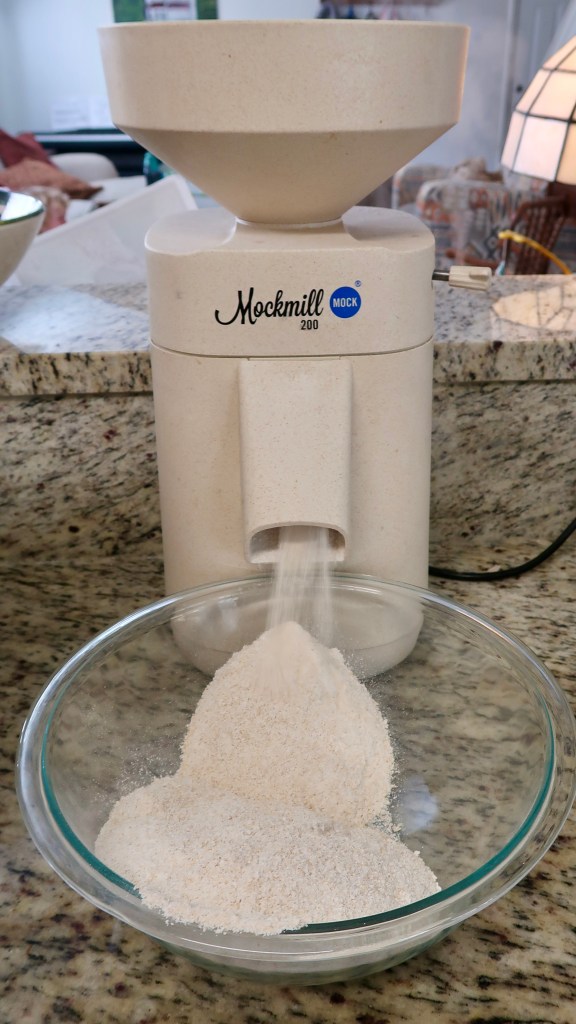
It took our family over a year to save up, and we’ve never looked back. I personally use the Mockmill 200, and I highly recommend it. It’s compact, powerful, and incredibly easy to use.
Why Fresh-Milled Flour Is Worth It
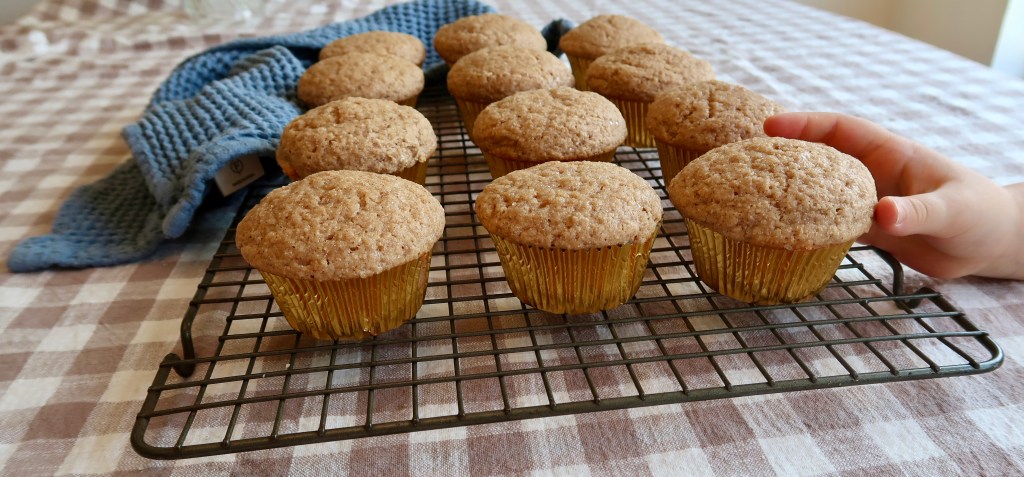
There’s nothing like pulling a warm, fresh-milled loaf of bread from the oven. In my opinion, it’s the perfect visualization of the homemaker’s heart: a woman who slows life down in the best ways to care for the people she loves most.
I encourage you to consider this journey. Milling your own flour is a life-long learning process, but the rewards are beautiful—and delicious.
Let’s Chat!
🌾 Does your family bake with fresh-milled grains?
🍞 What’s your favorite thing to make?
Drop your thoughts in the comments below—I’d love to hear from you.
Blessings,
Payton
The Contented Hearth




 thecontentedhearth.com
Leave a reply to The Perfect Fresh-Milled Yeast Rolls: Soft, Fluffy, and Made from Scratch Cancel reply