
This post may contain affiliate links. See our disclosure policy.
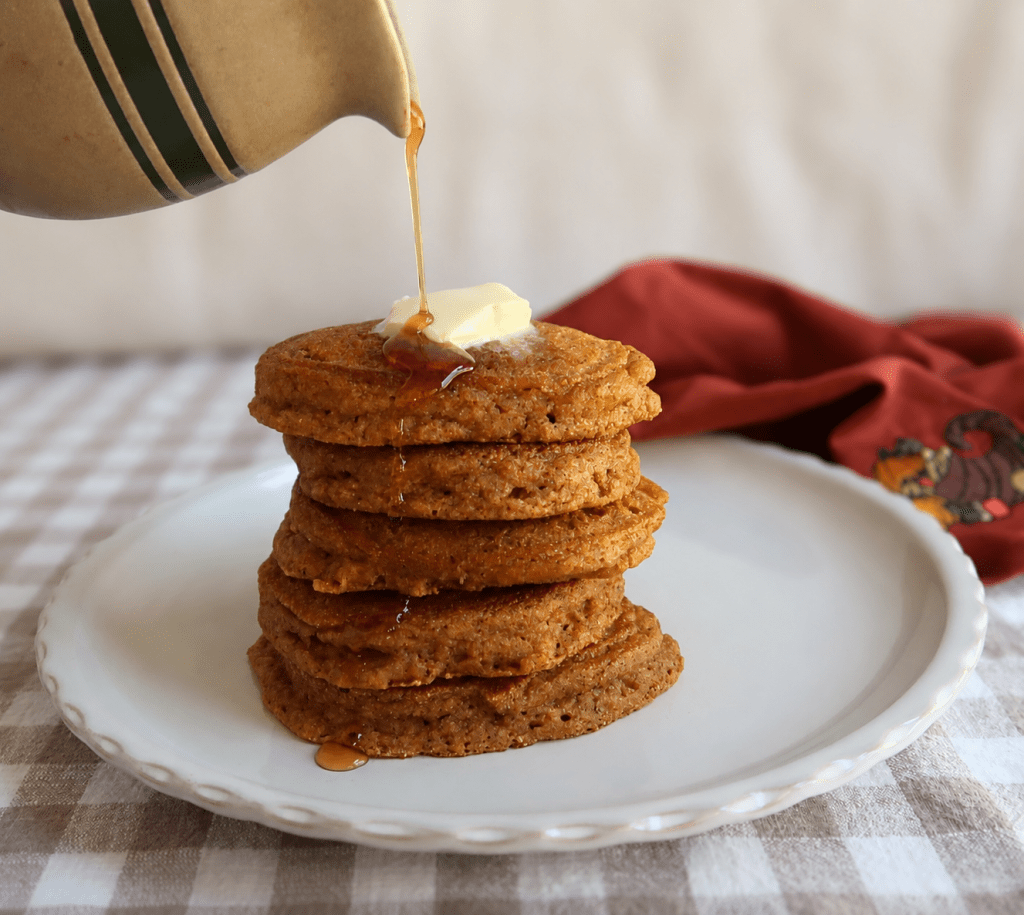
‘Tis the season for all things pumpkin, and do I have the easiest recipe for you!
My pumpkin pancake, made with freshly milled soft white wheat, highlights the fun flavors of pumpkin spice, is incredibly simple to make, and is packed with wholesome nutrition.
Anyone who wants to celebrate the changing seasons with traditional flavors will not want to miss this delicious staple! Read more, and I hope you enjoy!
Why Bake with Freshly Milled Flour?
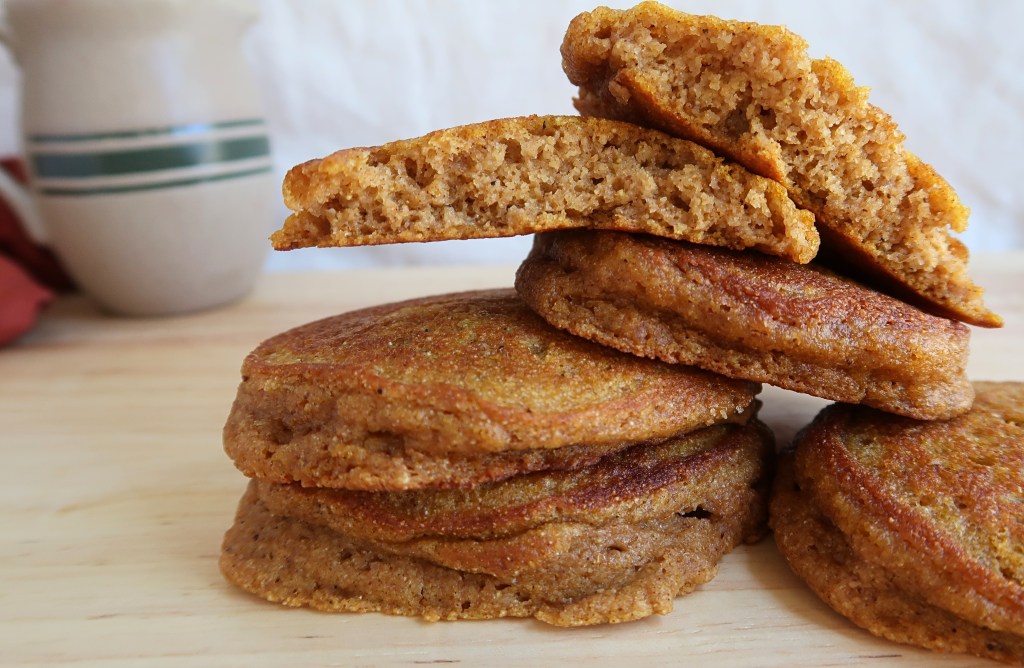
Simply put, it is much more nutrient-rich.
When wheat is milled, and the bran and germ are removed to create all-purpose flour, most of the fiber, vitamins, minerals, and healthy fats are lost. What remains is mostly starch and some protein. Because starch is rapidly broken down into glucose, baked goods made with white flour can cause a much sharper rise in blood sugar compared to whole-grain versions.
Below is a list of the nutrients in the humble wheat berry. It’s amazing!
Nutrients in Fresh-Milled Whole Wheat Flour
Fresh-milled flour is rich in naturally occurring nutrients that are often lost in store-bought white flour. By milling your own grains at home, you retain the full spectrum of vitamins, minerals, and fiber—exactly as God designed it.
Macronutrients
- Protein
- Healthy Carbohydrates
- Dietary Fiber
- Natural Fats (small amounts)
Key Vitamins
- Thiamine (B1)
- Riboflavin (B2)
- Niacin (B3)
- Pantothenic Acid (B5)
- Pyridoxine (B6)
- Folate (B9)
- Vitamin E
Essential Minerals
- Iron
- Magnesium
- Phosphorus
- Potassium
- Calcium
- Zinc
- Selenium
- Copper
- Manganese
- Natural Sodium (very low)
Note: Nutrient content can vary depending on the wheat variety and freshness, but fresh-milled flour is always more nourishing than refined alternatives.
✨Check out my blog post here for a more thorough breakdown of the benefits of fresh-milled flours.
Now that we understand the benefits of freshly milled flour, let’s take a look at which wheat berries work best for making fluffy pumpkin pancakes.
What Type of Wheat Berries Should I Use?

Different wheat berries contain varying amounts of protein, and two key proteins are essential for creating a strong gluten network: glutenin and gliadin.
- Glutenin – Gives dough strength and elasticity, helping bread hold its shape and rise.
- Gliadin – Makes dough stretchy and extensible, allowing it to expand during fermentation and baking.
When these two proteins work together, you get a strong, resilient gluten network that produces a perfect rise.
For a pancake, a strong gluten network is not necessary. This is why it is best to use a wheat with a low protein content. Soft white wheat is what I chose to use for this recipe. I think it makes fluffy pumpkin pancakes, with minimal fuss.
If you like ancient grains, feel free to try them out. I have not tested this recipe with different grains, so I cannot give exact grams. Einkorn tends to need a bit more flour than other grains, and spelt can behave similarly. Baking should be fun! Try new things, and you are certain to learn a lot along the way!
Check out my blog post that gives more information on wheat berries and their uses.
Now that you’ve selected your wheat, let’s prepare the simple tools needed for success.
Tools You’ll Need
- Grain mill
- Dough whisk
- Kitchen scale (preferred) or measuring cups and spoons
- Griddle or skillet
- Cookie scoop (optional, but helpful)
Ingredients You’ll Need
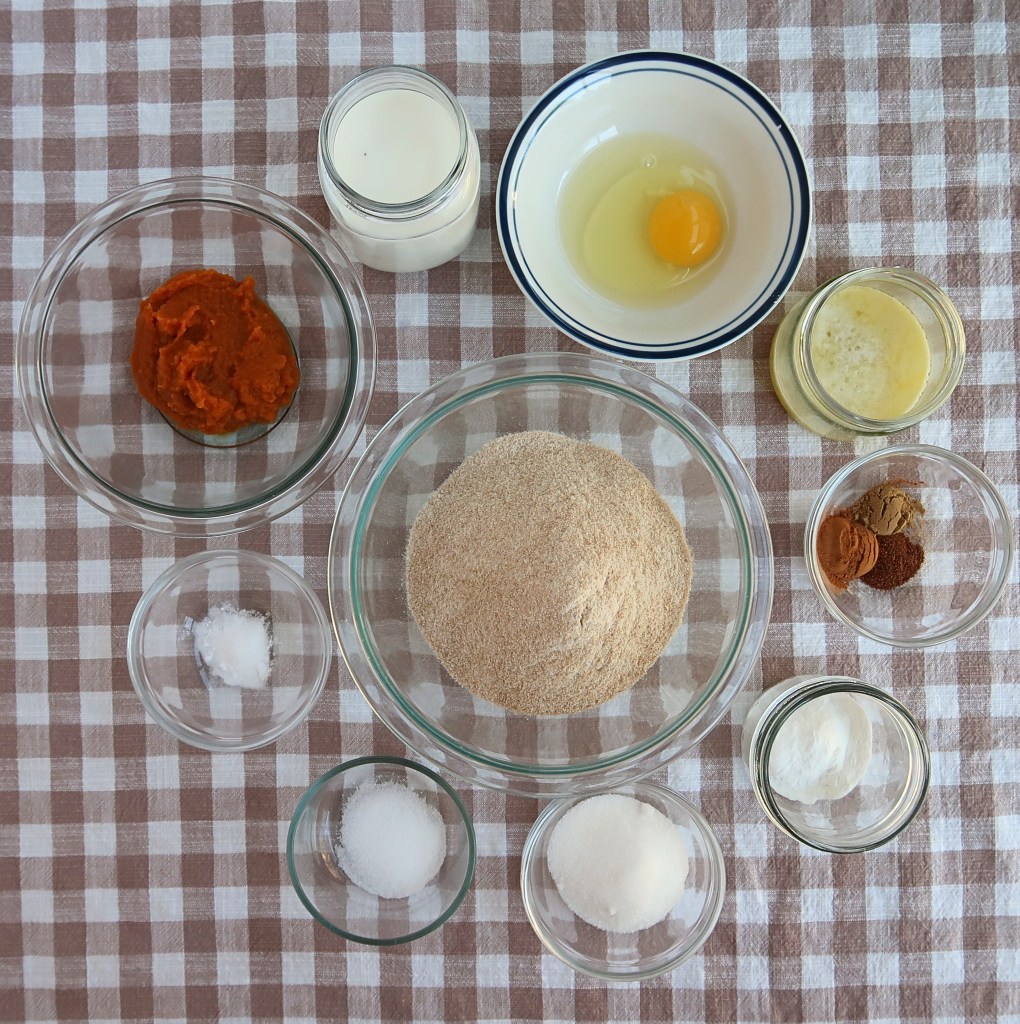
- Freshly milled soft white wheat
- Salt
- Baking soda
- Baking powder
- Powdered cinnamon, ginger, and nutmeg
- Egg
- Whole milk
- Melted, unsalted butter
- Sugar
- Pureed pumpkin
Fresh or canned pureed pumpkin work equally well in this recipe. Fresh pumpkin gives a subtle pumpkin flavor, while canned is more prominent. Follow the gram measurements for canned pumpkin, and you’ll get a thicker, moister pancake.
Water content varies in pumpkins, but in my testing, the measurements worked very well in fresh pumpkin too. Fresh pureed pumpkin resulted in a lighter, more delicate pancake.
Feel free to add more flour (say 10-15 grams) for a thicker pancake with fresh pumpkin. You could also hold back 10-15 grams of flour if you want a lighter pancake and are using canned pumpkin.
Step-by-Step: How to Make Fresh-Milled Pumpkin Pancakes
Step 1: Mill Your Grains
Mill your soft white wheat on a fine setting. Melt your butter and set aside.
Step 2: Mix Dry Ingredients
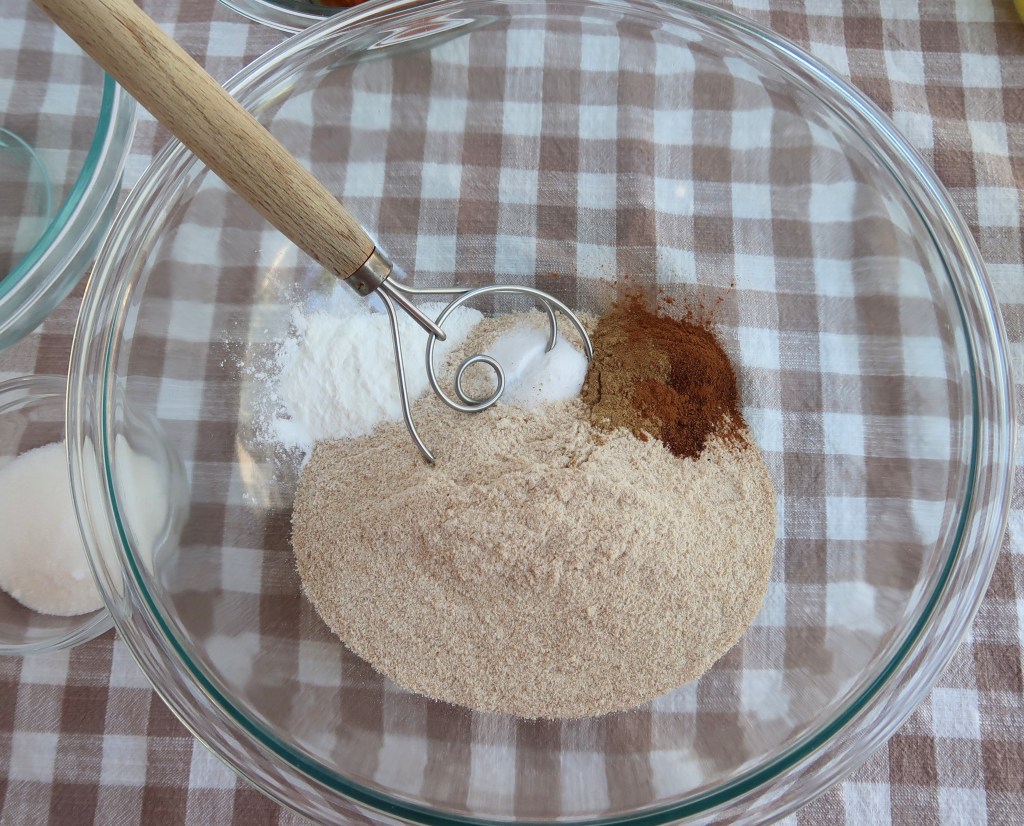
Mix your flour, salt, baking soda, baking powder, cinnamon, ginger, and nutmeg until combined.
Step 3: Mix Wet Ingredients
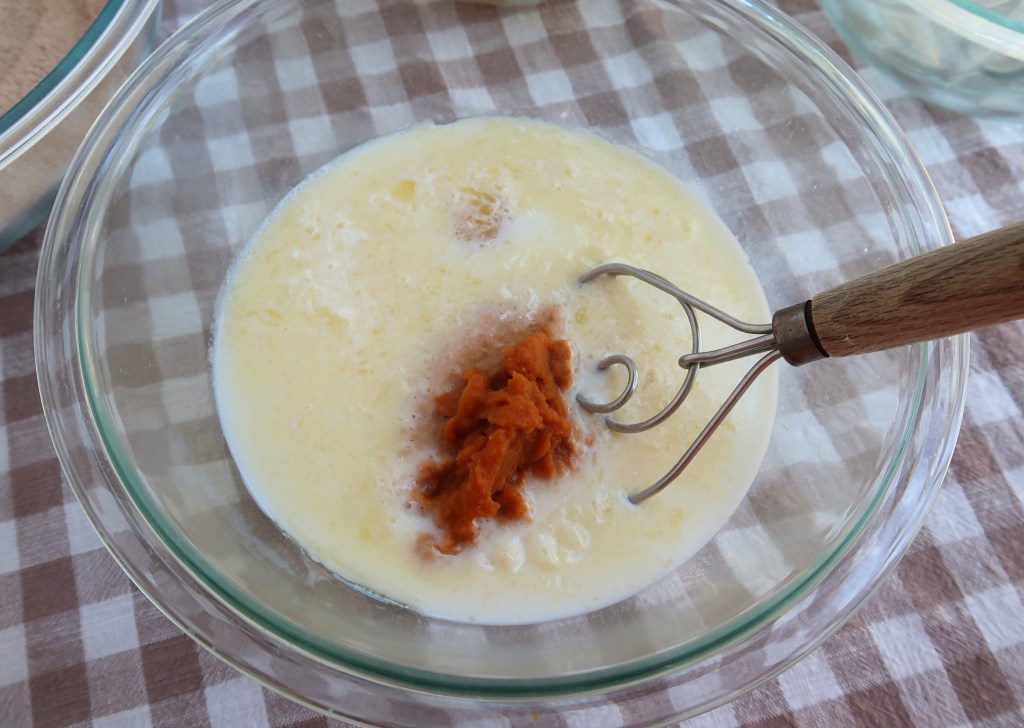
Mix your milk, pureed pumpkin, egg, sugar, and butter until well combined.
Step 4: Mix Wet Into Dry and Rest
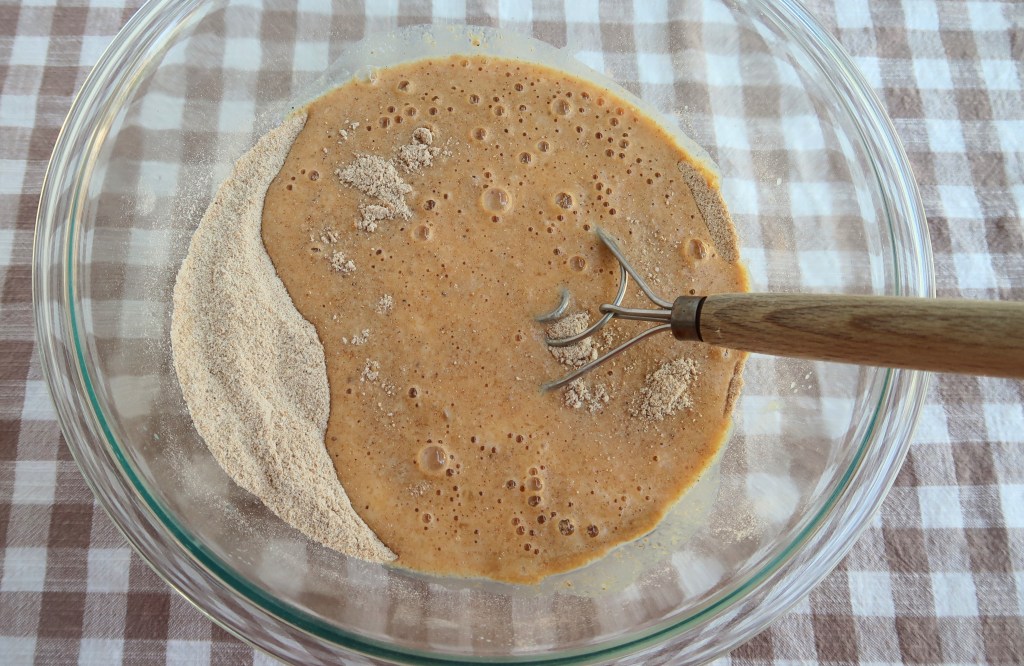
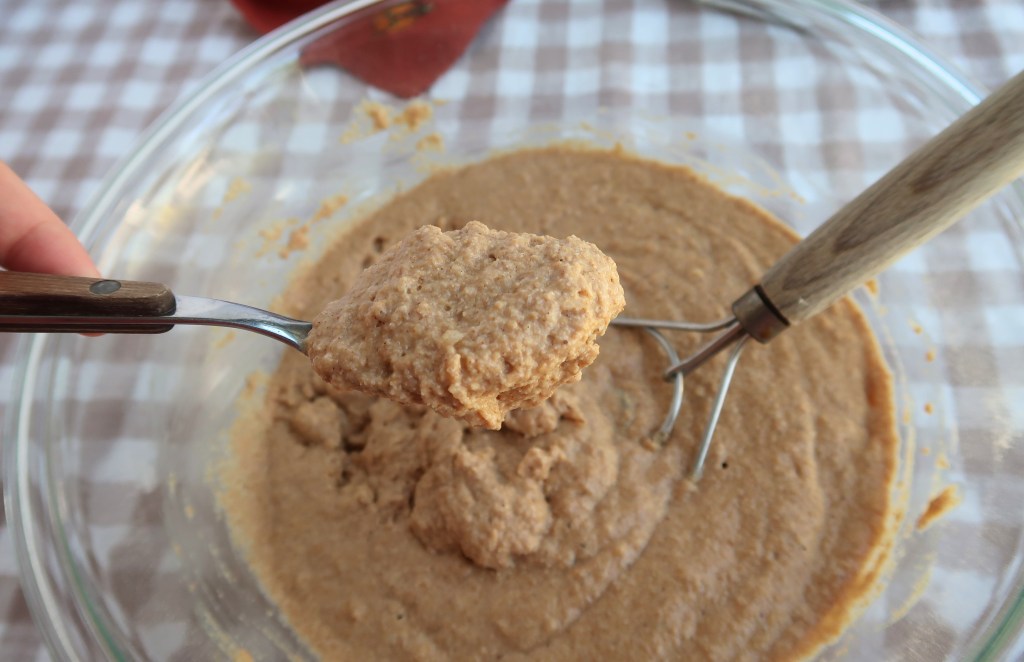
Mix your wet ingredients into your dry and stir until no dry flour remains. Let rest for at least 10 minutes.
Step 5: Cook
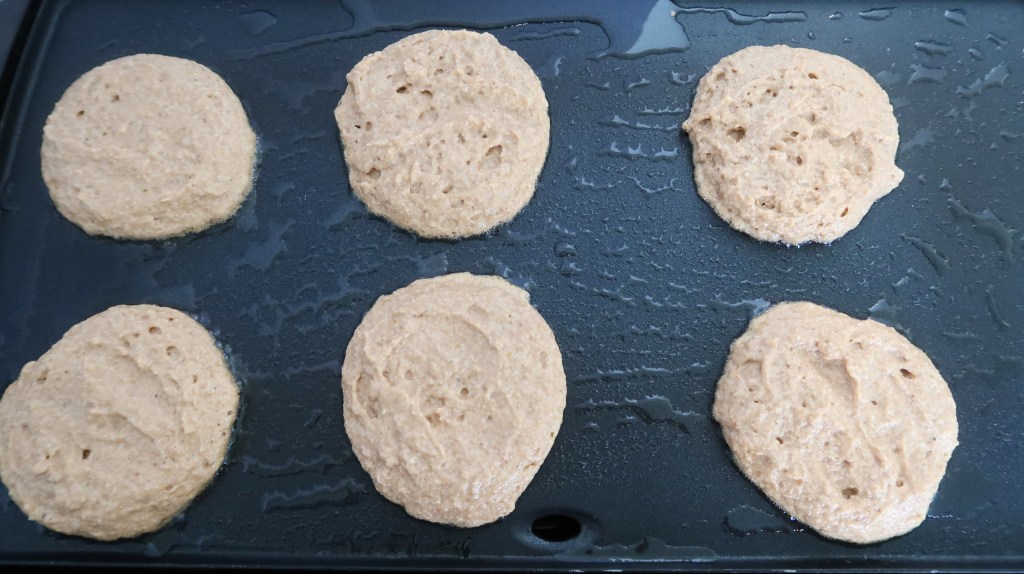
Heat your griddle or skillet generously with oil. I prefer an oil with a higher smoke point, like coconut oil.
When I use canned pumpkin, I find that they cook better if I immediately gently spread the batter out slightly as soon as I scoop it onto my griddle. Thicker pancakes will not make as many bubbles on top, so cooking at a lower temperature helps the middle cook through.
Fresh pureed pumpkin pancakes in my recipe can be cooked as a standard pancake, because the batter is thinner. I do look for bubbles on the top of the pancakes when using fresh pumpkin.
My favorite tool is a 1/4 cup cookie scoop to portion out my batter. It makes cooking pancakes super easy.
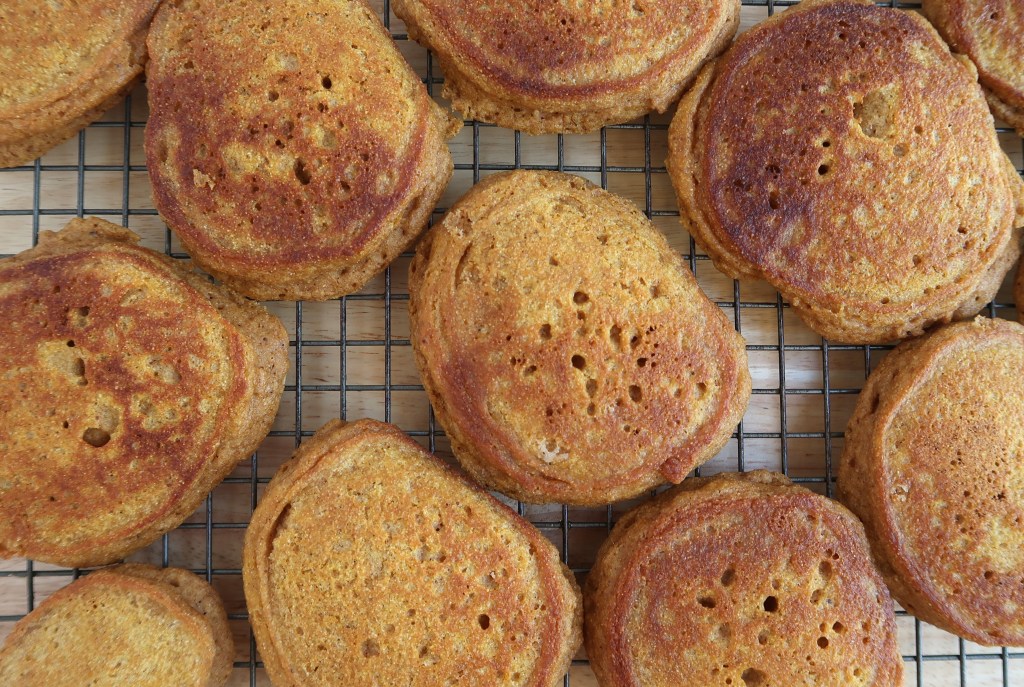
Fry all of your pancakes and enjoy!
Fresh-Milled Pumpkin Pancakes
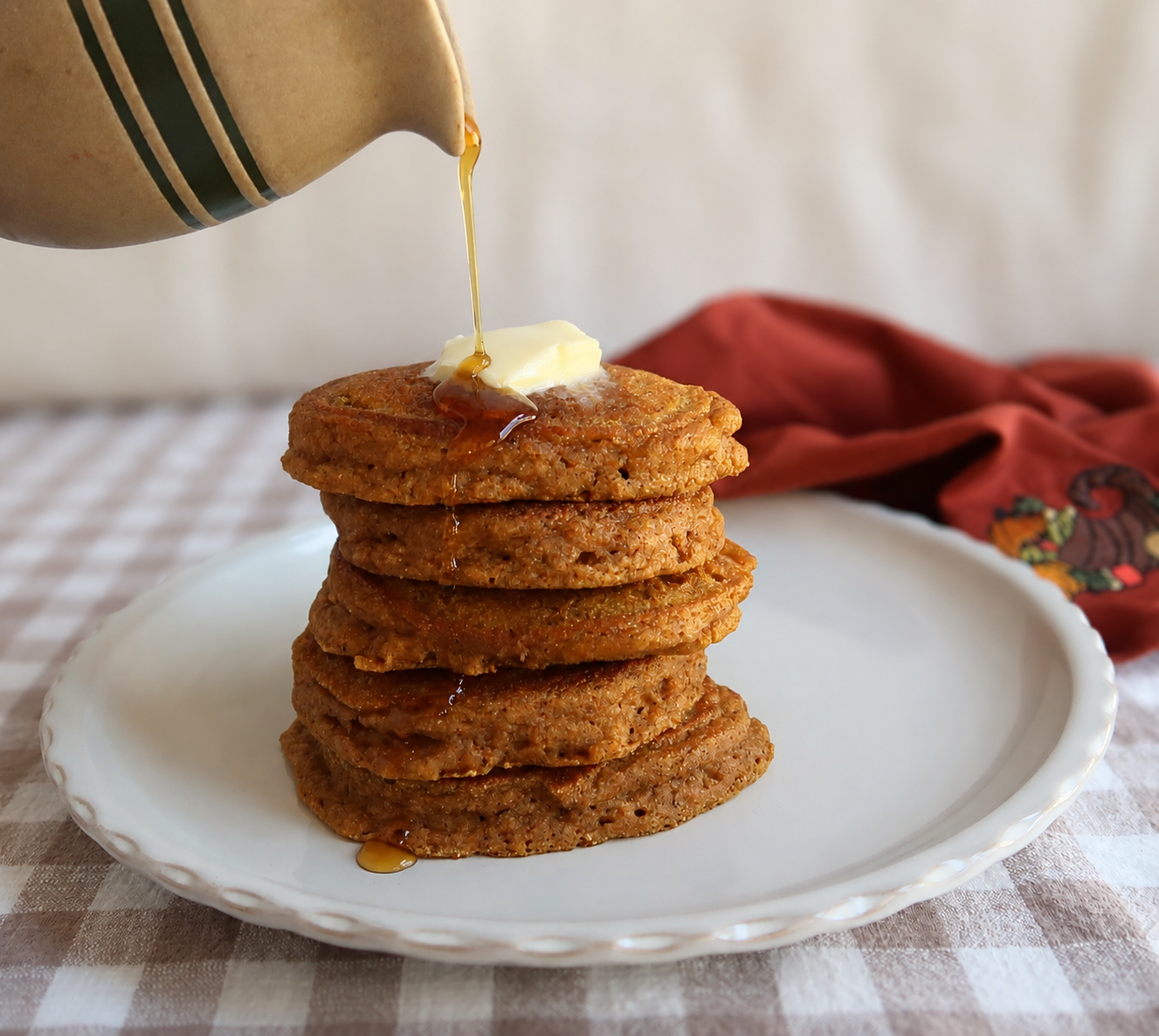
Important: Gram measurements are best for this recipe, especially when working with freshly milled flour. Volume measurements are estimates provided for convenience and may vary.
Ingredients
- 250 g freshly milled soft white wheat (about 2 cups)
- 2½ tsp baking powder
- ¼ tsp baking soda
- ¾ tsp salt
- 1½ tsp ground cinnamon
- ½ tsp ground ginger
- ¼ tsp ground nutmeg
- 125 g fresh or canned pumpkin puree (about ½ cup)
- 370 g whole milk (about 1½ cups)
- 1 large egg
- 3 tbsp unsalted butter, melted and slightly cooled
- 45 g sugar (about 3½ tbsp)
Step 1 – Mill Your Flour
Finely mill the soft white wheat. Melt the butter and set aside to cool slightly.
Step 2 – Mix Dry Ingredients
Whisk together the freshly milled flour, baking powder, baking soda, salt, cinnamon, ginger, and nutmeg.
Step 3 – Mix Wet Ingredients
Whisk together the milk, pumpkin puree, egg, sugar, and melted butter until well combined.
Step 4 – Combine and Rest
Stir the wet ingredients into the dry ingredients just until no dry flour remains. Let the batter rest for at least 10 minutes.
Step 5 – Cook
Heat a griddle or skillet over medium-low to medium heat and generously grease with a high-smoke-point oil, such as coconut oil. Portion batter with a ¼-cup cookie scoop.
For canned pumpkin, gently spread the batter slightly after scooping. Cook at a lower temperature so the thicker pancakes cook through before the outside browns. For fresh pumpkin, the thinner batter can be cooked like a standard pancake; look for bubbles on the surface before flipping.
Step 6 – Serve
Cook until golden and cooked through, flipping once. Serve warm with butter, maple syrup, or your favorite pancake toppings.
Fresh vs. Canned Pumpkin
Fresh or canned pumpkin puree work equally well in this recipe. Fresh pumpkin gives a subtle pumpkin flavor, while canned pumpkin is more prominent. Use the gram measurement for canned pumpkin; it produces a thicker, moister pancake.
Pumpkin water content varies, but in testing, these measurements also worked well with fresh pumpkin. Fresh puree produces a lighter, more delicate pancake.
For a thicker pancake with fresh pumpkin, add 10–15 g more flour. For a lighter pancake when using canned pumpkin, you can reduce the flour by 10–15 g.
Tips for Success
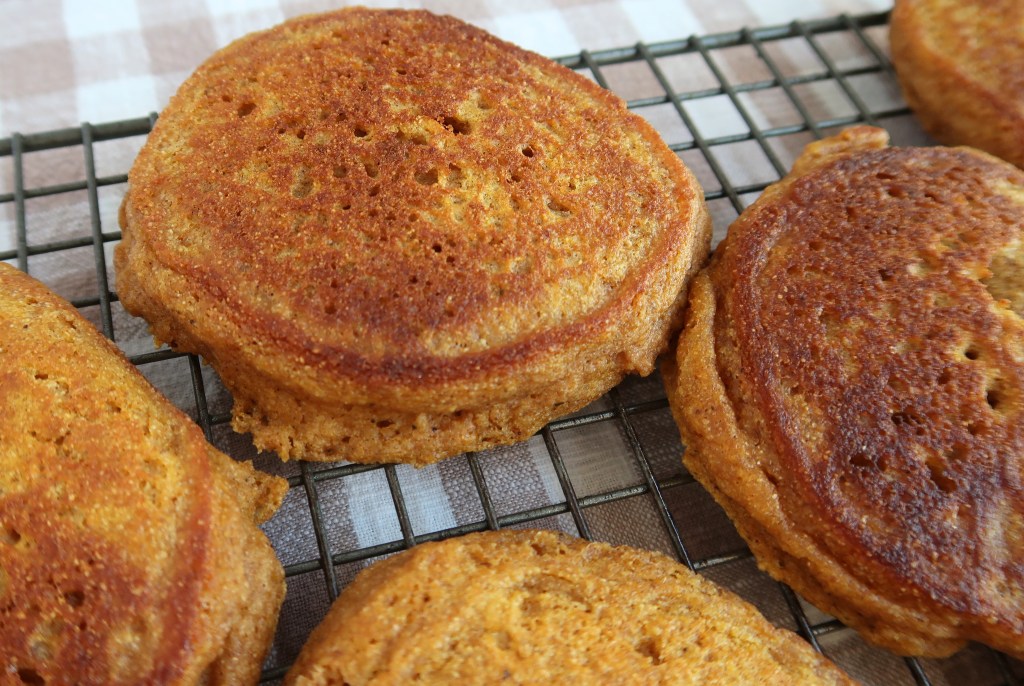
- Mill your soft white wheat on a fine setting
- Follow the gram measurements
- Let your batter rest for at least 10 minutes before frying
Storage and Freezing Tips
These pancakes last well in the fridge for up to 3 days. I like to pop them in the toaster for a quick reheat.
Freezing pancakes is my favorite homemaking hack. I triple or even quadruple the recipe. Let your pancakes fully cool and place them flat in a freezer-safe Ziploc bag. Try to remove excess air. They last well up to 3 months in the freezer.
FAQ
Can I use canned pumpkin instead of fresh pumpkin?
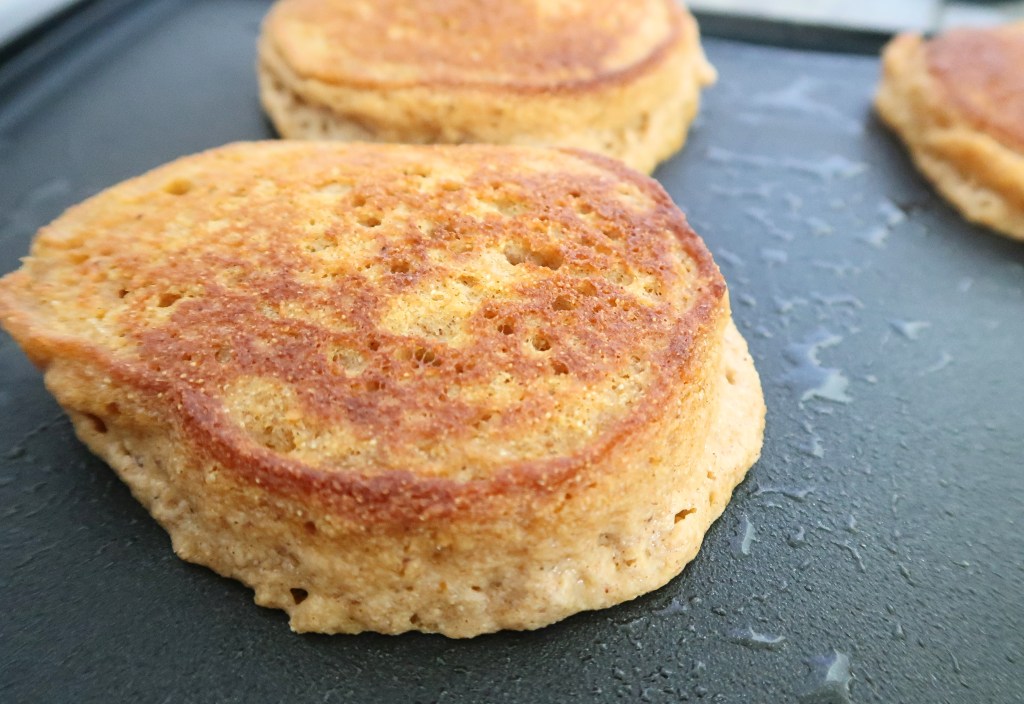
Yes! This recipe works well with canned or fresh pureed pumpkin. Fresh pumpkin will give you a lighter pumpkin flavor and a slightly flatter pancake. Canned will have a more prominent pumpkin flavor and a thicker pancake.
Can I substitute buttermilk for regular milk in pumpkin pancakes?
Yes, you can. You’ll need more buttermilk to achieve the right consistency. You want a batter that is loose and somewhat scoopable.
How do I keep fresh-milled pumpkin pancakes light and fluffy?
Following the gram measurements will help tremendously! If you find they are still thicker than your liking, feel free to add 10-15 grams of milk.
Can I make these pumpkin pancakes ahead of time?
Absolutely! I love cooking and freezing pancakes. Reheating in the oven for a few minutes makes breakfast super fast. If you want to leave the batter in the fridge and fry it later, cover it, and you may find you need slightly more liquid because the bran and germ will continue to absorb moisture during the longer rest.
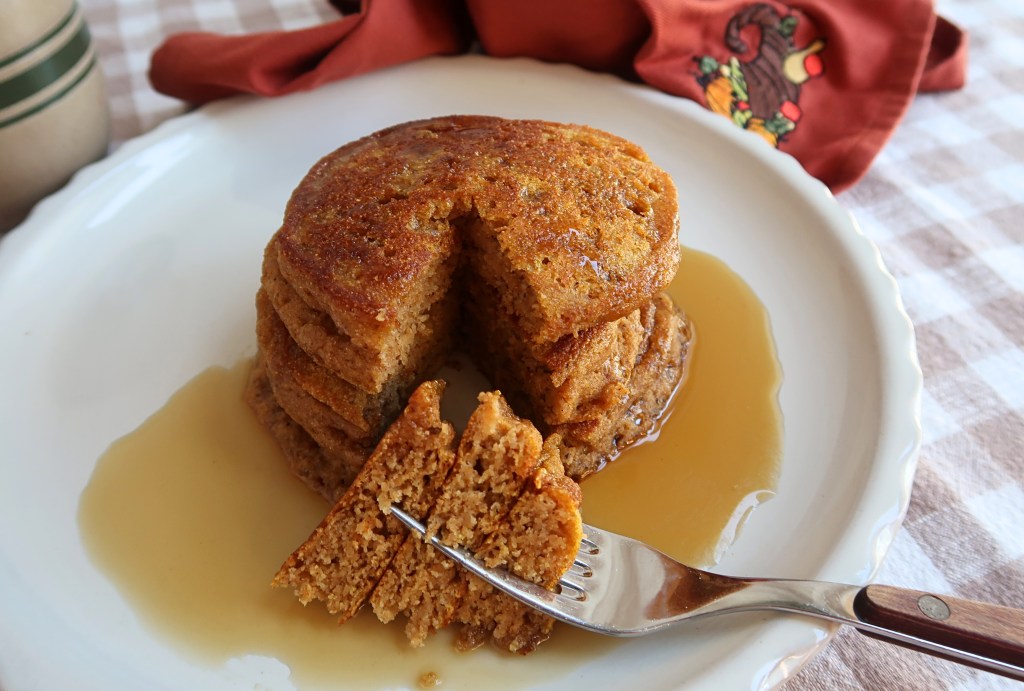
Pumpkin flavors are always a fall favorite, and nothing can be simpler than a pumpkin pancake with freshly milled flour. I hope that you try this recipe out and love it as much as our family does!
What’s your favorite way to enjoy a pumpkin pancake made with freshly milled flour?
Blessings,
Payton


 thecontentedhearth.com
Leave a comment